Practical
Thai hotel prices with “++”: what service charge and VAT add
For anyone puzzled by a “++” price.

Reviewed

Photo credit
- The math
- × 1.177 with 10% service, then 7% VAT
- Service charge
- Assumed 10%; check the rate the offer states
- VAT
- 7% on the subtotal, until 30 Sep 2027
- Final bill
- Confirm the provider’s final total
- Net price
- Service charge and VAT included
The short answer
If an offer adds a 10 percent service charge and then 7 percent VAT on the subtotal, multiply the “++” price by 1.177. A base rate of 1,000 becomes 1,177 under those assumptions. Check the offer’s actual charge percentages, inclusions and other fees before you compare prices, and treat a figure worked out this way as an estimate: the provider’s final checkout total for your dates, guests and room is the one to confirm.
- The rule: The two plus signs stand for a service charge and VAT (currently 7 percent) added on top of the base price. This guide’s numbers assume a 10 percent service charge; check the rate the offer states.
- Where: You see this notation on hotel booking pages, restaurant menus, and spa price lists across the country.
What “++” means
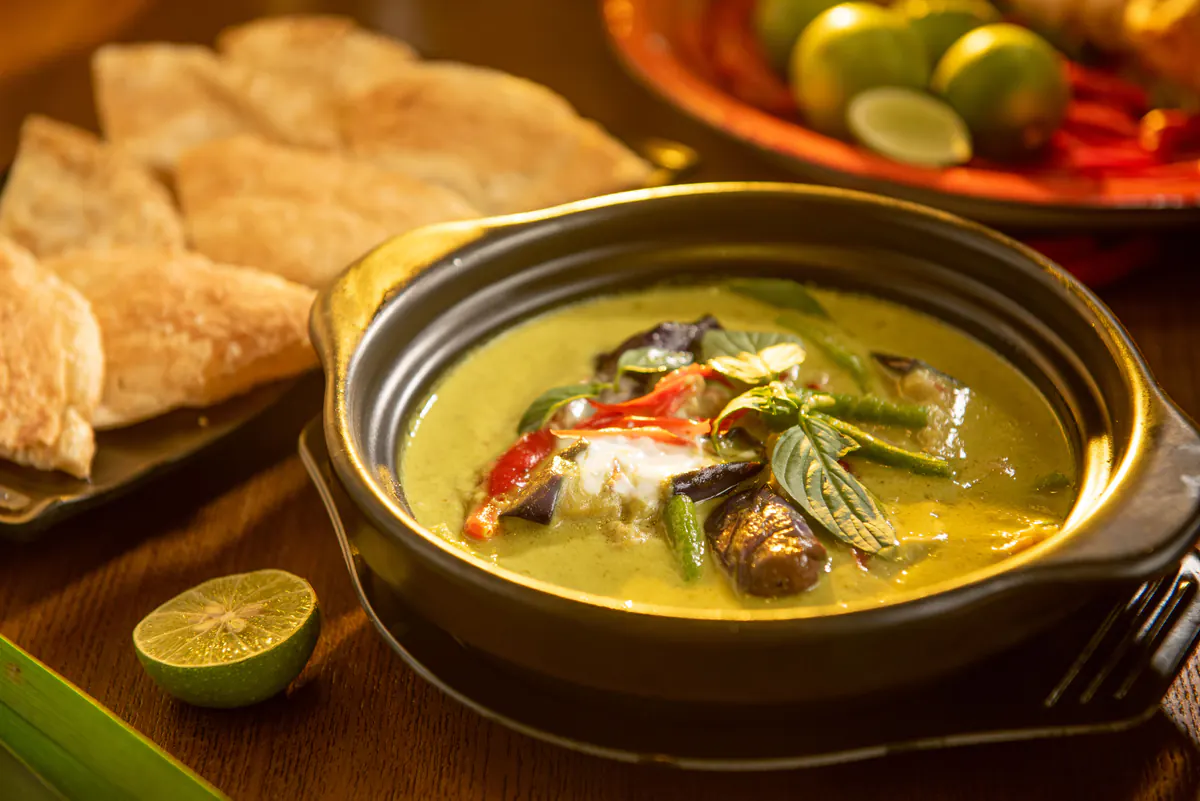
Photo credit
By law, Thailand’s standard VAT rate is 10 percent, but the government periodically reduces it to 7 percent to stimulate spending. This current reduction runs until September 30, 2027 (Royal Decree No. 807, published in the Royal Gazette on 23 August 2026; checked 17 October 2026).
The ×1.177 figure assumes a 10 percent service charge and that the two additions compound rather than apply to the base price side by side: the venue adds the service charge to your base rate first, then calculates the 7 percent VAT on that new subtotal. You then pay tax on the service charge as well as on the room rate or your meal.
Knowing the calculation helps you budget and spot these charges before you pay. Here is the arithmetic on a base rate of 1,000, with a 10 percent service charge and 7 percent VAT:
- Base price: The advertised room rate or meal cost before the service charge and VAT is 1,000.
- Plus 10 percent service charge: The venue adds 100 directly to the base price to create a new subtotal of 1,100.
- Plus 7 percent VAT: The government calculates a 7 percent tax on the 1,100 subtotal, adding another 77.
- The total: With these two charges compounding, the total addition works out to 17.7 percent, making the total 1,177 before any other fees.
Work it out
If an offer states a 10 percent service charge and 7 percent VAT on the subtotal, multiply the “++” price by 1.177. Enter the base price below; if the offer states a different service charge, enter that too. The calculator gives an estimate: the provider’s final checkout total is the amount to confirm.
By default, this assumes the offer adds a 10% service charge, then 7% VAT on the subtotal (Thailand’s rate until 30 September 2027). That is the ++ price × 1.10 × 1.07, or × 1.177.
So ฿1,000++ comes to about ฿1,177 under those assumptions. Treat it as an estimate (est.): an offer can use a different service charge or add other fees. Confirm the provider’s final total.
You can also do this math quickly on your phone calculator. Enter the base price, multiply it by 1.1, and then multiply that result by 1.07. This gives the same estimate for a 10 percent service charge and 7 percent VAT.
Sometimes you see a single plus sign instead of the usual double plus. This usually means the price includes the VAT but excludes the service charge, or vice versa. In those cases, you only apply the relevant percentage.
Where you will see it
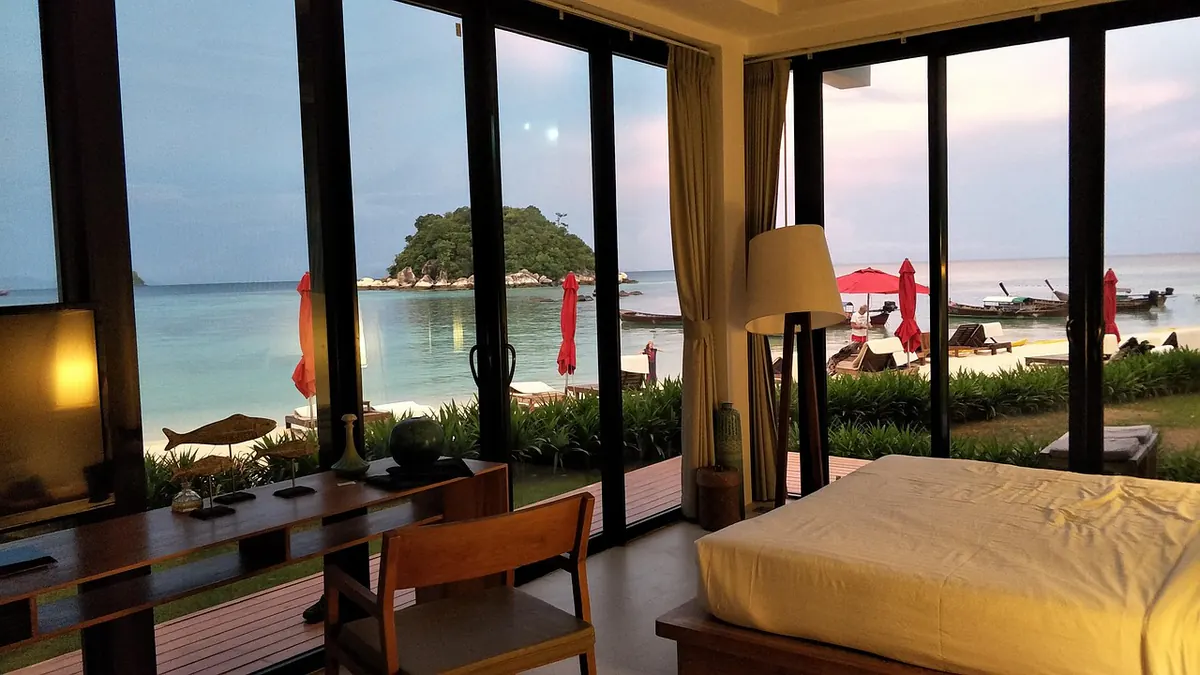
Photo credit
The “++” notation is standard across the Thai hospitality sector. You encounter it most frequently when booking accommodation or sitting down for a meal.
- Hotel rates: Many international booking platforms display the base rate in large text, while the taxes and fees sit in smaller print.
- Restaurant menus: Mid-range dining rooms, hotel bars, and beach clubs usually state at the bottom of the page if prices are subject to additions.
- Booking sites: Always check the final payment page closely, as some hotels add other local charges or city levies that sit outside the standard formula.
- Villas and long stays: Serviced apartments and resort villas run like hotels can add the same charges, while private rentals usually quote one monthly price, so ask which it is before you sign.
- Where you usually will not see it: Street food stalls, casual local restaurants, and independent operators on the street usually quote net prices.
Pick booking platforms that display “net” prices if you want to stick strictly to a daily budget without doing mental math on every search page.
Skip platforms that display “net” prices if you prefer to see how much of your money goes to the hotel versus the government.
Comparing prices across sites
Comparing accommodation is frustrating when every website displays prices differently. Some lead with the base rate, others with the total. To compare like with like, compare the all-in prices for the same room, dates, guests and cancellation terms: the base rate plus the service charge, the 7 percent VAT and any other fees.
If a site only shows a pre-tax price and states a 10 percent service charge and 7 percent VAT, multiply it by 1.177 and treat the result as an estimate. A different service charge or other fees change the total, so confirm the provider’s final checkout total for your dates, guests and room before you book.
Over busy holidays, compare more than the rate. Our December guide covers the holiday gala dinners and minimum stays to check for, and our Songkran guide covers booking around mid-April.
Tip
A price followed by the word “net” means the service charge and VAT are already included in the number you see; other fees, such as a city levy, can still apply.
Frequently asked questions
Is ++ included in prices on booking sites?
It depends on the platform and your location settings. Some sites show the base rate initially and only add the service charge and VAT at the final checkout screen. With a 10 percent service charge and 7 percent VAT, that is 17.7 percent on top; the checkout total is the figure to confirm.
Do I still need to tip?
You don’t need to leave an additional tip if a venue applies a 10 percent service charge. The staff shares this charge, though leaving loose change is common for exceptional service.
Can tourists claim the VAT back on hotel bills?
No, the VAT refund for tourists only applies to goods purchased at participating retail shops that you take out of the country. You can’t claim back the VAT spent on accommodation or meals.
Is the service charge compulsory?
Expect to pay it when it is shown clearly. In October 2022 Thailand’s Office of the Consumer Protection Board said a restaurant may collect a service charge only when it displays the charge clearly, and that customers can refuse to pay one that was not displayed. For a hotel, the booking conditions state its charges; check them before you book.
Sources and checks
Drafted with help from an AI model, then fact-checked against the sources below and reviewed by Sajal on 17 Oct 2026.
Updated is the last change to what this guide says. Reviewed is when Sajal last checked it.
Sources
- Revenue Department: Royal Decree No. 807 (B.E. 2569) on the VAT rate reduction, 7% to 30 September 2027 (Royal Gazette, 23 Aug 2026), in Thai
- PwC Worldwide Tax Summaries: Thailand, corporate, other taxes (last reviewed 24 Aug 2026)
- HKTDC Research: Thailand, reduced 7% VAT extended until September 2027 (27 Aug 2026)
- Bangkok Post: Hotels warn 3% tax could hurt tourism recovery (5 Aug 2026)
- The Nation: Tracing Thailand's 34 years of VAT cuts through 23 royal decrees (16 Aug 2026)
- The Nation: Luxury resorts in Thailand give staff record service charge payouts (30 Jan 2025)
- Revenue Department: VAT Refund for Tourists, how to claim a VAT refund
- VATupdate: How tourists can claim a VAT refund in Thailand (8 Nov 2025)
- ONESIAM: VAT refund in Thailand, how to claim your shopping tax back (services such as hotel stays and dining excluded)
- Bangkok Post: Restaurants cautioned over 10% service charge (5 Oct 2022)
Checked claims
- A base rate of 1,000 becomes 1,177 under those assumptions.
- The staff shares this charge, though leaving loose change is common for exceptional service.
- Thailand's reduced 7 percent VAT rate runs until 30 September 2027 (Royal Decree No. 807, Royal Gazette, 23 August 2026).
- By law Thailand's standard VAT rate is 10 percent; a royal decree keeps it at 7 percent for now.
- The VAT refund for tourists only applies to goods bought at participating shops and taken out of the country; VAT on accommodation or meals cannot be claimed back.
- A restaurant may collect a service charge only when it displays the charge clearly, and customers can refuse one that was not displayed (Office of the Consumer Protection Board, October 2022).
Confirmed: the source supports it. Each check was AI-assisted: “by web search” means a search found the source, “source read” means the source itself was opened and read.
Changes to this guide
First published .
- : Links added beside the reader's next decision: comparing prices now links the December guide (Christmas Eve gala dinners and holiday-week minimum stays) and the Songkran guide (booking around mid-April). No facts changed; the new sentence only points to those guides.
- : Sources made claim-specific: every source has a real title in place of its domain; the VAT date now cites Royal Decree No. 807 itself (Royal Gazette, 23 August 2026), read in full on 17 October 2026; the refund answer adds the Revenue Department's VAT Refund for Tourists conditions; the service charge answer now says what the Office of the Consumer Protection Board said in October 2022 (a restaurant may collect it when it displays it clearly) instead of calling it mandatory. The pointer to the December guide now reads "holiday gala dinners and minimum stays", as that guide no longer says Christmas Eve dinners are required.
- : Corrected: × 1.177 is an estimate for a 10% service charge followed by 7% VAT on the subtotal, not an exact final bill for every “++” price. The calculator now shows its assumptions and takes the offer’s own service charge, and the guide says to confirm the provider’s final total. The VAT date now links the Revenue Department’s Royal Decree No. 807.
- : New card layout reviewed and published by Sajal.
- : Rewritten in its own tone; 8 facts checked by web search with sources, 6 still to check by a person.
- : 4 more facts confirmed by web search (sources added); 1 left for a person to check.
- : Reviewed and published by Sajal.
- : Restructured into destination cards from the published version; new claims marked for checking.
- : 2 more facts confirmed by web search (sources added); 0 left for a person to check.
- : 20 more facts confirmed by web search (sources added); 13 left for a person to check.
- : AI-assisted draft; not yet checked.