Month guide
Where to go in Thailand in January 2027
For a January 2027 trip: north, south or islands.

Reviewed Data refreshed

Photo credit
Photo: Vyacheslav ArgenbergCC BY 4.0Wikimedia Commons

- Andaman coast weather
- Dry season on average; the sea varies day to day
- Gulf islands weather
- Some rain on average (Koh Samui ~135 mm)
- Northern weather
- Cool mornings, usually clearer air
- Chinese New Year
- February 2027
The short answer
January 2027 suits a route combining the north with one beach base. On average it is one of the driest months across much of the country, with the Andaman coast in its dry season and cool mornings in the north. Historical January averages help you compare regions, but they cannot tell you how the sea or the weather will be on a particular day. Before an outdoor or island trip, check current forecasts and marine warnings, then confirm your departure with the operator.
- Beaches: The Andaman side, including Phuket and Krabi, is in its dry season, which usually makes it the easier choice for island trips.
- Cool mornings: Northern towns like Chiang Mai average around 19 degrees Celsius, and early mornings are colder, so you need a light jacket before noon.
- Islands in the Gulf: Koh Samui and Koh Tao are drying out from their late-year monsoon, but you should still expect some passing showers.
- Watch for: This is peak season, so domestic flights and island ferries book up fast.
January weather at a glance
| Destination | Rain | Temp | VerdictAbout these numbersJanuary averages: NASA POWER climatology (MERRA-2, monthly means 2001–2020), air temperature (T2M) and rainfall (PRECTOTCORR) at each place's centre, fetched . Some rain means 100–199 mm. The data for each place: Chiang Mai, Chiang Rai, Pai, Bangkok, Pattaya, Koh Chang, Phuket, Krabi, Khao Lak, Koh Lipe, Koh Samui, Koh Tao. |
|---|---|---|---|
| Chiang Mai | ~15 mm | 19 °C | Cool and dry |
| Chiang Rai | ~19 mm | 19 °C | Cool and dry |
| Pai | ~16 mm | 18 °C | Cool and dry |
| Bangkok | ~16 mm | 26 °C | Cool and dry |
| Pattaya | ~25 mm | 27 °C | Cool and dry |
| Koh Chang | ~45 mm | 26 °C | Cool and dry |
| Phuket | ~80 mm | 27 °C | Cool and dry |
| Krabi | ~93 mm | 26 °C | Cool and dry |
| Khao Lak | ~80 mm | 27 °C | Cool and dry |
| Koh Lipe | ~66 mm | 28 °C | Cool and dry |
| Koh Samui | ~135 mm | 27 °C | Some rain |
| Koh Tao | ~116 mm | 27 °C | Some rain |
On average the north and the Andaman coast are in their dry seasons. Over in the Gulf, Koh Samui still averages about 135 mm of rain in January and Koh Tao about 116 mm, and February is much drier. These are monthly averages, not a forecast for your days: check the Thai Meteorological Department’s 7-day forecast, shipping forecast and weather warnings before you travel, and keep a flexible alternative for boat days.
What’s on in January 2027
- National Children’s Day: Expected on 9 January 2027. Military bases and zoos usually open up with family activities, making city traffic noticeably heavier; check local programmes nearer the day.
- Bo Sang Umbrella Festival: Locals decorate the streets with handmade paper crafts about 10 kilometres east of Chiang Mai. It is usually held over the third weekend of January; check the 2027 dates before you plan around it.
- Full Moon Party: The Haad Rin business-maintained calendar lists 22 January 2027, an expected date checked 19 October 2026. Our Full Moon Party guide explains the source and the choice of base. Reconfirm the event before booking ferries.
- Concert in the Park: The Royal Bangkok Symphony Orchestra has played free outdoor shows on Sunday evenings on the grass in Lumphini Park; check its 2027 schedule.
Phuket
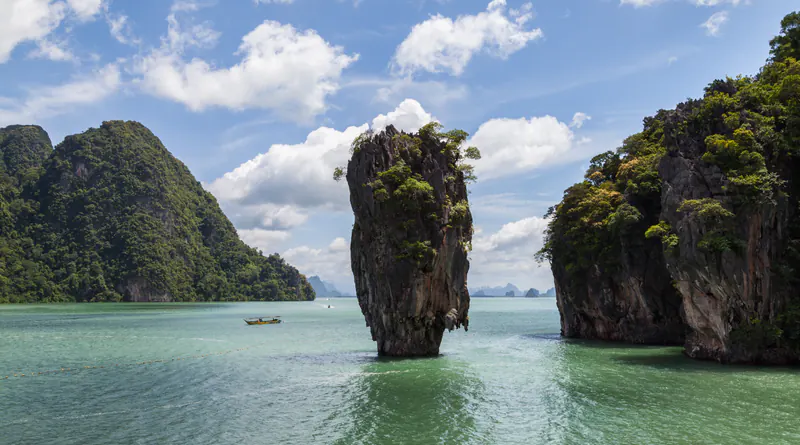
Photo credit
Photo: Diego DelsoCC BY-SA 3.0Wikimedia Commons

Climate source
Monthly averages from NASA POWER climatology (MERRA-2, monthly means 2001–2020), air temperature (T2M) and rainfall (PRECTOTCORR) at Phuket's centre (7.8804° N, 98.3381° E). An average, never a forecast.
Phuket gives you direct international flights and a long stretch of west-coast beaches, in their dry season in January. It is the easiest place to land and immediately start a beach trip without waiting for a ferry.
- Best for
- A straightforward arrival and plenty of direct transport to smaller islands.
- Don’t miss
- West coast sunsets: January is one of the drier months, which gives you good odds of a clear evening for drinks on the sand.
- Island hopping: Speedboat trips to the Phi Phi islands and Phang Nga Bay are a dry-season staple, but any departure can be cancelled for weather, so check with your operator.
- Old Town: Walk past the restored Sino-Portuguese shophouses when the afternoon heat drops.
- Night markets: Eat outdoor street food without the high humidity of the rainy season.
- Where to stay
- Pick Kata or Karon for long, walkable beaches, or skip it if you hate heavy traffic and prefer a quiet, isolated island.
Krabi
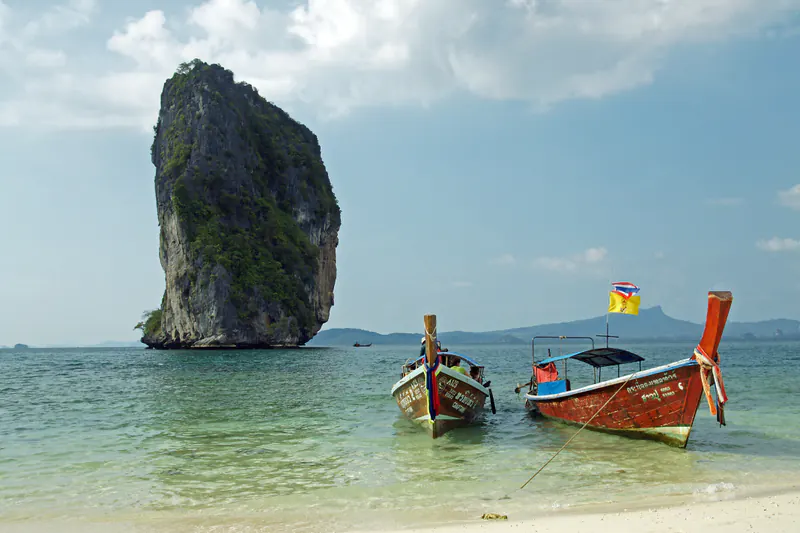
Photo credit
Photo: kallernaCC BY-SA 3.0Wikimedia Commons

Climate source
Monthly averages from NASA POWER climatology (MERRA-2, monthly means 2001–2020), air temperature (T2M) and rainfall (PRECTOTCORR) at Krabi's centre (8.0412° N, 98.8259° E). An average, never a forecast.
Krabi sits across the bay from Phuket and trades the big-city feel for sheer limestone cliffs dropping into the ocean. January is usually dry, which helps when taking longtail boats out to the Railay peninsula, though any crossing depends on the sea on the day.
- Best for
- Dramatic coastal scenery and easy access to offshore islands.
- Don’t miss
- Railay’s cliffs: Hire a longtail boat from Ao Nang to reach this roadless peninsula.
- Island tours: Join a boat trip to Koh Poda and Chicken Island.
- Tiger Cave Temple: Climb the 1,260 steps early in the morning before the sun gets too hot.
- Night market: Grab fresh seafood in Krabi Town on weekend evenings.
- Where to stay
- Pick Ao Nang for easy boat access and plenty of restaurants, or skip it if you want the beach right outside your door, as you often have to commute to the sand.
Koh Lipe
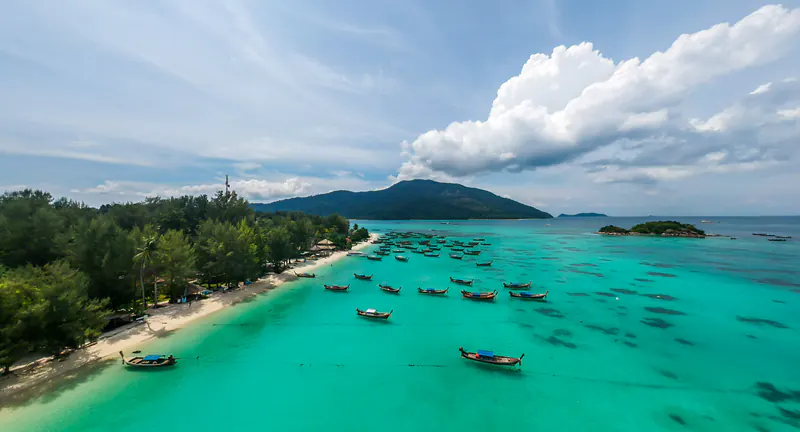
Photo credit

Climate source
Monthly averages from NASA POWER climatology (MERRA-2, monthly means 2001–2020), air temperature (T2M) and rainfall (PRECTOTCORR) at Koh Lipe's centre (6.4890° N, 99.3050° E). An average, never a forecast.
This small island in the far south is known for clear water and walkable beaches that shine in the January sun. January is in its dry season on average, and settled days make for good snorkeling right off the sand. Wind and sea still change from day to day, so check the forecast before a boat trip.
- Best for
- Clear water, coral reefs and a small-island feel without cars.
- Don’t miss
- Sunrise Beach: Wake up early for a quiet stretch of sand.
- Snorkeling trips: Hire a boat to see the reefs around the nearby Tarutao National Marine Park.
- Walking Street: Eat grilled seafood and find a cold beer when the sun goes down.
- Sunset Beach: Grab a spot on the sand for a quiet end to the day.
- Where to stay
- Pick Sunrise Beach for immediate access to the water, or skip this island entirely if you hate long transit times, as it requires a 90-minute speedboat ride.
Koh Samui
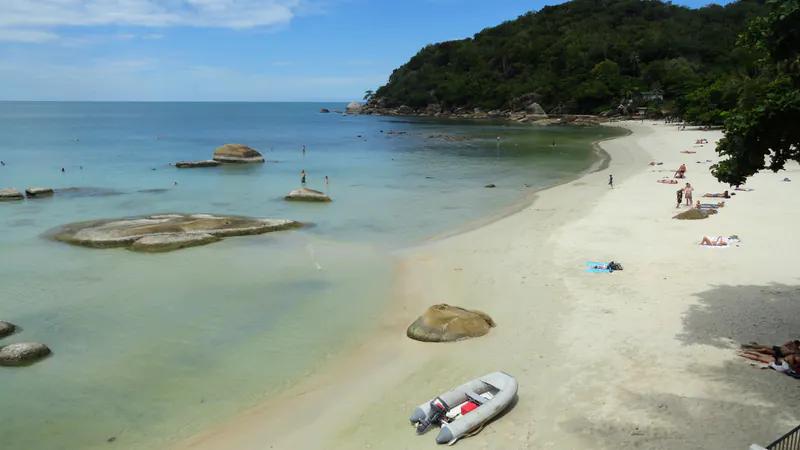
Photo credit
Photo: Fabio Achilli from Milano, ItalyCC BY 2.0Wikimedia Commons

Climate source
Monthly averages from NASA POWER climatology (MERRA-2, monthly means 2001–2020), air temperature (T2M) and rainfall (PRECTOTCORR) at Koh Samui's centre (9.5120° N, 100.0136° E). An average, never a forecast.
The Gulf coast has a different climate pattern, and while the heavy late-year storms have usually moved on, Samui is still drying out. It still averages about 135 mm of rain in January, so expect some showers. Any ferry crossing can still be delayed or cancelled when the sea is rough, so check the shipping forecast and your operator’s notices before a ferry day. On average February is much drier.
- Best for
- A Gulf coast base with an airport and plenty of cafes.
- Don’t miss
- Fisherman’s Village: Walk the Friday night market in Bophut for street food and clothes.
- Temple tours: See the Big Buddha on the northern coast when the skies clear.
- Beach clubs: Spend the afternoon on the sand in Chaweng or Lamai.
- Jungle safaris: Take a 4x4 tour up into the hills while the waterfalls are still flowing.
- Where to stay
- Pick Bophut for a calm beach and good restaurants, or skip Samui if you demand a zero percent chance of rain for your holiday.
Koh Tao
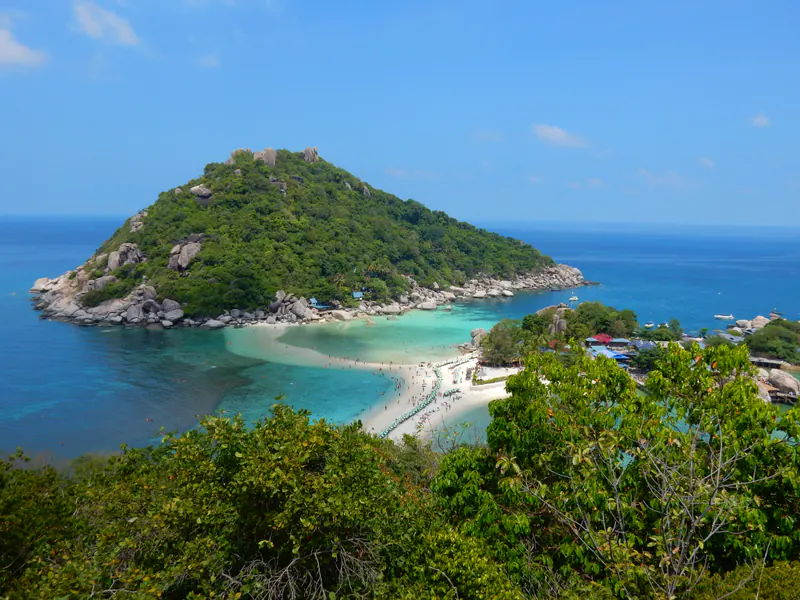
Photo credit
Photo: Roma NeusCC BY 3.0Wikimedia Commons

Climate source
Monthly averages from NASA POWER climatology (MERRA-2, monthly means 2001–2020), air temperature (T2M) and rainfall (PRECTOTCORR) at Koh Tao's centre (10.0956° N, 99.8340° E). An average, never a forecast.
Koh Tao remains a major hub for scuba diving. Underwater visibility often improves as the wet season ends, but it changes with the weather, so ask your dive school about current conditions. It still catches around 116 mm of rain this month, so expect a few passing showers between dive sessions.
- Best for
- Scuba diving certification and a younger, backpacker-heavy crowd.
- Don’t miss
- Diving courses: Get your open water certification at one of the dozens of dive schools.
- Sairee Beach: Watch the sunset and stay for the fire shows and beach bars.
- Koh Nang Yuan: Take a taxi boat to this nearby island for a short hike and snorkeling.
- Viewpoint hikes: Walk up to John-Suwan viewpoint for a look over the southern bays.
- Where to stay
- Pick Sairee Beach for nightlife and easy access to dive shops, or skip this island if you do not care about diving or snorkeling.
Chiang Mai
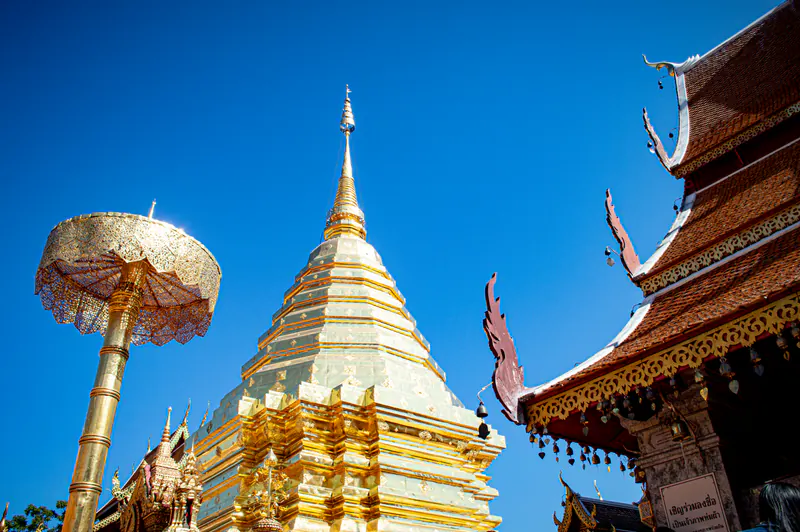
Photo credit
Photo: Philip NalanganCC BY 4.0Wikimedia Commons

Climate source
Monthly averages from NASA POWER climatology (MERRA-2, monthly means 2001–2020), air temperature (T2M) and rainfall (PRECTOTCORR) at Chiang Mai's centre (18.7883° N, 98.9853° E). An average, never a forecast.
January is the smart window for a northern trip, usually giving you clear, sunny days before the smoky season, which this site’s season table flags from February to April. The month averages around 19 degrees Celsius across the day and early mornings are colder, making it a very comfortable time to explore the old city moat.
- Best for
- Cool mornings, hundreds of temples and a huge cafe scene.
- Don’t miss
- Doi Suthep: Ride a red truck up the mountain to see the golden temple overlooking the city.
- Sunday Walking Street: Walk the length of the old city for crafts and street food.
- Coffee culture: Spend a morning in the Nimman area, which has a dense concentration of cafes.
- Elephant sanctuaries: Visit an ethical rescue center in the surrounding mountains.
- Where to stay
- Pick the Old City to be within walking distance of the major temples, or skip Chiang Mai if you only want beach time. To weigh the Old City against Nimman, see Old City or Nimman.
Pai
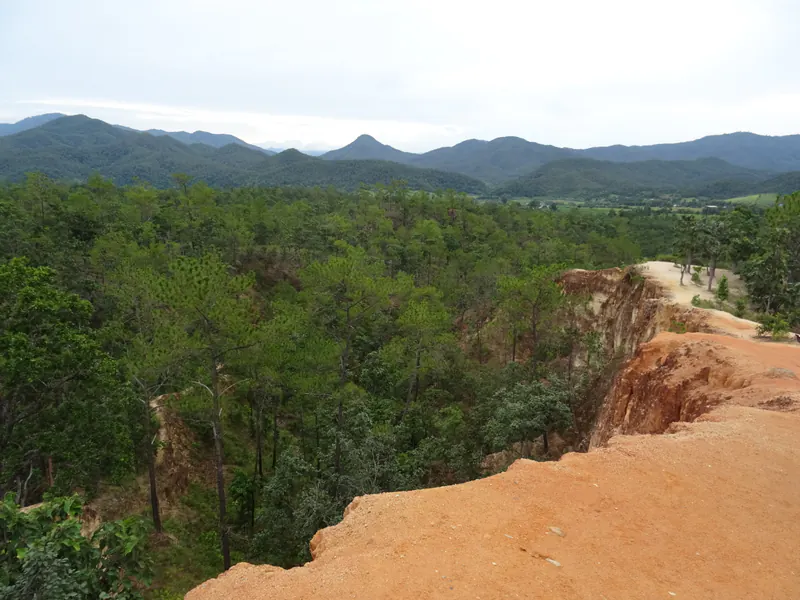
Photo credit
Photo: Christophe95CC BY-SA 4.0Wikimedia Commons

Climate source
Monthly averages from NASA POWER climatology (MERRA-2, monthly means 2001–2020), air temperature (T2M) and rainfall (PRECTOTCORR) at Pai's centre (19.3583° N, 98.4400° E). An average, never a forecast.
Pai involves a winding mountain transfer, so decide whether the journey fits your trip before adding it to a northern route. January usually brings cool weather to the valley; pack a layer for early starts, as Pai averages around 18 degrees Celsius in January and the early mornings are colder still.
- Best for
- Mountain views, scooter trips and a relaxed, bohemian atmosphere.
- Don’t miss
- Pai Canyon: Walk the narrow dirt ridges at sunset for a view over the valley.
- Hot springs: Soak in the warm water early in the morning when the air is still cold.
- Walking Street: Eat your way through the nightly street food market in the center of town.
- Waterfalls: Hike to Pam Bok or Mo Paeng while they still have water from the rainy season.
- Where to stay
- Pick a riverside bungalow for quiet mornings, or skip Pai if you get severe motion sickness on the 762 curves from Chiang Mai.
Bangkok

Photo credit
Photo: Basile MorinCC BY-SA 4.0Wikimedia Commons

Climate source
Monthly averages from NASA POWER climatology (MERRA-2, monthly means 2001–2020), air temperature (T2M) and rainfall (PRECTOTCORR) at Bangkok's centre (13.7563° N, 100.5018° E). An average, never a forecast.
Bangkok fits a January route for food, markets and onward transport. The city averages just 16 mm of rain in January, one of its driest months, so outdoor plans usually work out; check the forecast for your day anyway.
- Best for
- Street food, historical sites and easy transit connections to the rest of the country.
- Don’t miss
- The Grand Palace: Arrive right when it opens to beat the crowds and the midday sun.
- Chinatown: Eat dinner on Yaowarat Road as the neon signs light up.
- Chao Phraya River: Take the public ferry to see the temples from the water.
- Chatuchak Market: Shop for clothes and souvenirs over the weekend.
- Where to stay
- Pick Sukhumvit to be right on the Skytrain line, or skip Bangkok entirely if you hate big crowds and concrete heat.
What to watch for
- Peak season crowds: January is busy, so rooms in popular spots fill early. Book ahead.
- Air quality changes: The air in the north is usually clearer in January than later in the dry season, when smoke often builds from around February. Check current air-quality readings close to your trip. Our Chiang Mai burning season guide shows where to check them and how to read them.
- Chinese New Year: This major holiday falls on February 6, 2027, so you avoid the travel spike if you stick to January.
How long to stay
With 10 to 14 days, combine one beach base with time in Bangkok or Chiang Mai. Allow for travel between them rather than trying to include every region. With less time, choose one region and leave room to change a weather-dependent boat day. To choose between the two beach bases, see Phuket or Krabi.
Frequently asked questions
Is January a good time to visit Thailand?
Yes, for most of the country. On average January is one of the driest and most comfortable months. The Andaman coast is in its dry season and the northern mountains offer crisp, cool mornings. The sea still varies from day to day, so check the forecast before boat trips.
Is Koh Samui rainy in January?
It is drying out, but you should still expect some passing showers. The island averages around 135 mm of rain this month, and February is much drier on average.
Is it cold in Chiang Mai in January?
January averages around 19 degrees Celsius and the mornings are colder than that, so you will want a light jacket. By the afternoon, the sun pushes the temperature back up to a comfortable level.
Where is the best beach weather in January?
On average, the Andaman coast, including Phuket, Krabi and Koh Lipe, where January falls in the dry season. That is a historical pattern, not a promise about the sea on a given day: check the 7-day forecast and confirm boat trips with the operator, then check flight schedules to the southern airports to start planning your route.
Sources and checks
Drafted with help from an AI model, then fact-checked against the sources below and reviewed by Sajal on 19 Oct 2026.
Updated is the last change to what this guide says. Reviewed is when Sajal last checked it. Data refreshed is when the weather averages or the dated facts it shows were last fetched or checked.
Sources
- Tourism Authority of Thailand (Australia office): Bo Sang Handicraft Village, 9 km from Chiang Mai Old City
- Royal Bangkok Symphony Orchestra: Concert in the Park 33 (Sundays, 11 Jan – 1 Mar 2026, Lumpini Park)
- OTEP (สกสค.): why National Children's Day falls on the second Saturday of January (8 Jan 2024), in Thai
- The Nation: Bangkok resumes popular "Music in the Park" series for January 2026 (7 Jan 2026)
- Weather Spark: Chiang Mai January weather, average temperature (model reconstruction 1980–2016)
- Thailand NOW: Bo Sang Umbrella Festival 2026 (third weekend of January)
- Senate of Thailand: history of National Children's Day, held on the second Saturday of January (10 Jan 2024), in Thai
- Ploysiam Speedboat: travel information for Koh Lipe (Pak Bara to Koh Lipe, 1 hour 30 minutes direct)
- The Nation: Children and seniors get free entry to six zoos for National Children's Day (8 Jan 2026)
- Koh Nangyuan Resort: how to get to Koh Nangyuan
- Thai Meteorological Department: 7-day weather forecast
- Thai Meteorological Department: shipping forecast
- Thai Meteorological Department: weather warnings
- Thai PBS World: Thailand's Children's Day 2026 (10 Jan 2026)
- NASA POWER climatology (MERRA-2, monthly means 2001–2020): air temperature (T2M) and rainfall (PRECTOTCORR) at Bangkok (13.7563° N, 100.5018° E)
- NASA POWER climatology (MERRA-2, monthly means 2001–2020): air temperature (T2M) and rainfall (PRECTOTCORR) at Koh Samui (9.5120° N, 100.0136° E) and Koh Tao (10.0956° N, 99.8340° E)
- Full Moon Party: upcoming dates (page maintained by Haad Rin business members; checked 19 October 2026)
Dates
- National Children's Day:
Expected: based on past years.
Checked claims
- Pick Sunrise Beach for immediate access to the water, or skip this island entirely if you hate long transit times, as it requires a 90-minute speedboat ride.
- Koh Nang Yuan: Take a taxi boat to this nearby island for a short hike and snorkeling.
- January is one of the driest months on average; averages cannot say how the sea or weather will be on a given day; check current forecasts and marine warnings and confirm the departure with the operator.
- Bangkok averages 16 mm of rain in January; outdoor plans usually work out, check the forecast for the day.
- Koh Samui averages about 135 mm in January (Koh Tao about 116 mm); any ferry crossing can be delayed or cancelled in rough seas.
- Phuket speedboat trips are a dry-season staple, but any departure can be cancelled for weather.
- Chiang Mai: January averages about 19 °C across the day; early mornings are colder.
- North in January: usually clear, sunny days and usually clearer air than later in the dry season, when smoke often builds from around February; check current readings.
- National Children's Day is held on the second Saturday of January, so it is expected on 9 January 2027; military sites and zoos have held family activities on the day.
- Bo Sang lies about 10 km east of Chiang Mai and its umbrella festival is usually held over the third weekend of January; the 2027 dates are not announced yet.
- The Royal Bangkok Symphony Orchestra's free Concert in the Park plays on Sunday evenings in Lumphini Park (11 January to 1 March in 2026); the 2027 season is not announced yet.
- The direct speedboat from Pak Bara pier to Koh Lipe takes about 90 minutes; services change with the season.
Confirmed: the source supports it; qualified: no source can promise this, so it is worded as something to check; expected: published or recurring timing that still needs reconfirmation. Each check was AI-assisted: “by web search” means a search found the source, “source read” means the source itself was opened and read.
Changes to this guide
First published .
- : Linked the expected Full Moon date to its calendar and tightened the advice on choosing a route.
- : Copy edited with Codex (GPT-6). Copy cleanup: removed two stray paragraph openers and made the suggested trip length conditional. Weather figures, event dates, sources and review record are unchanged.
- : Links added beside the reader's next decision: the air-quality note links the burning season guide, and the Chiang Mai and beach bases link Old City or Nimman and Phuket or Krabi. No facts changed.
- : Sources made claim-specific: the TAT, State Railway, Bangkok Symphony and TMD homepages are gone; the Bo Sang festival now cites TAT's Bo Sang page, Concert in the Park the Royal Bangkok Symphony Orchestra's own season page (the orchestra is now named correctly), and Children's Day the Senate's note on the second-Saturday rule, checked 17 October 2026. Every source has a real title; an unrelated Sukhothai weather page and a TMD chart with no readable figures are dropped. Climate figures now name NASA POWER's dataset (MERRA-2 monthly means, 2001–2020), its temperature and rainfall parameters and each place's coordinates, and link that place's exact data query instead of the NASA POWER homepage.
- : Future events qualified: the Full Moon date is marked as expected from party calendars with the check date, and Children's Day, Bo Sang and the Lumphini concerts say to check the 2027 programme.
- : Weather and boat advice made conditional: no flat-sea, no-wind, completely-safe or normal-ferry promises; 19 °C given as the monthly mean; links to TMD's current forecast, shipping forecast and warnings.
- : New card layout reviewed and published by Sajal.
- : Rewritten in its own tone; 6 facts checked by web search with sources, 3 still to check by a person.
- : 2 more facts confirmed by web search (sources added); 1 left for a person to check.
- : Reviewed and published by Sajal.
- : Restructured into destination cards from the published version; new claims marked for checking.
- : 5 more facts confirmed by web search (sources added); 2 left for a person to check.
- : 31 more facts confirmed by web search (sources added); 8 left for a person to check.
- : AI-assisted draft; not yet checked.